Turning Customer Questions Into Product Intelligence
Clarios Power Risk Assessment
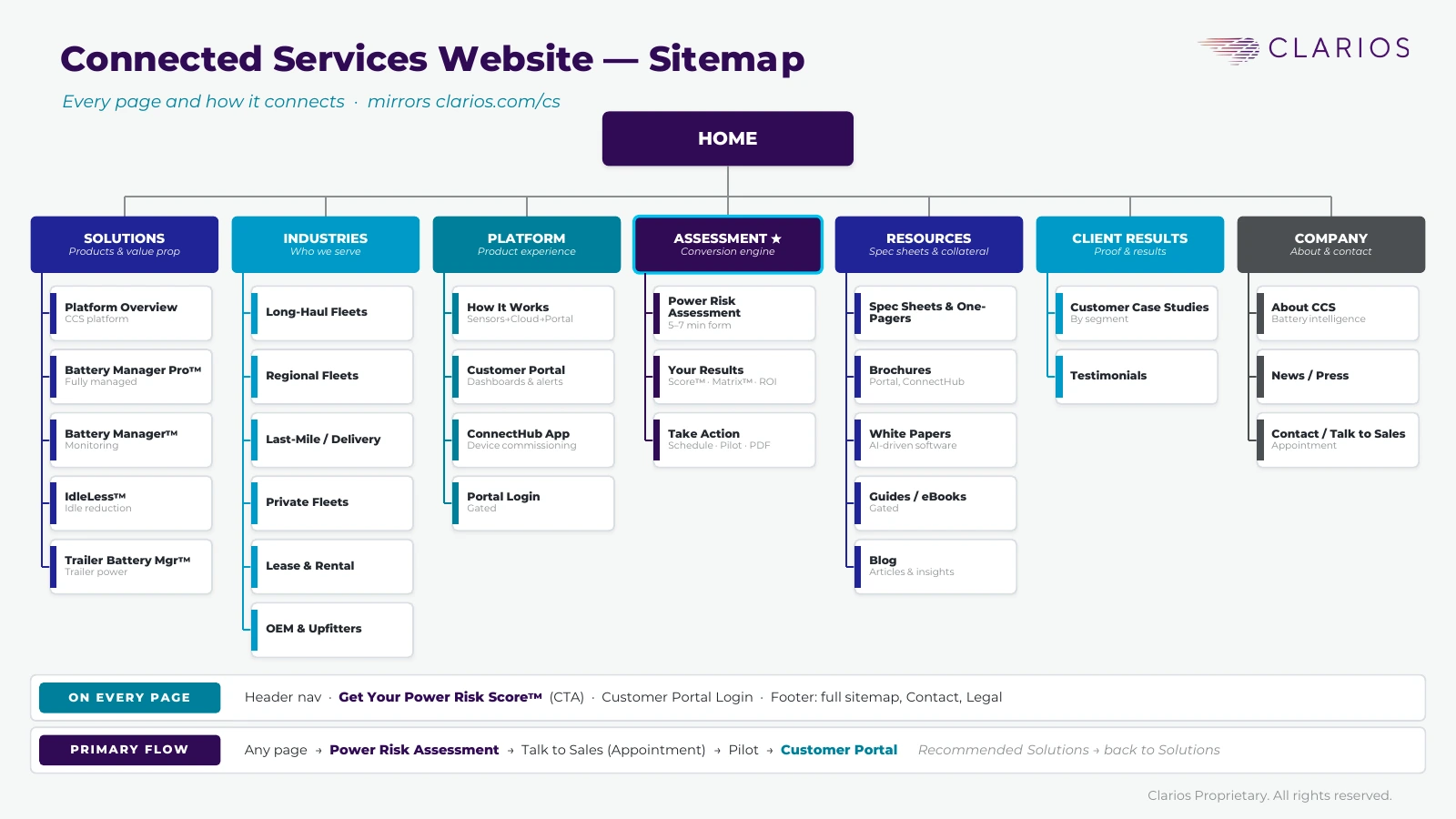
Interactive Application / Assessment Logic / Enterprise Lead Engagement
A fleet operator can share a few details about how vehicles are used and maintained and get a tailored risk profile. I built the prototype to give buyers useful context early and give sales a more informed starting point.
Enterprise application prototype developed by Marci Bryant during her Clarios Connected Services engagement.
The business challenge
Fleet operators may know they have electrical-system disruptions without knowing how to assess the risk or which product could help. A conventional lead form collects contact details while leaving those questions unanswered.
My strategic approach
I turned the first interaction into a guided assessment that helps buyers describe their fleet, reflect on how they manage battery issues, and get relevant feedback before talking to sales.
What I built
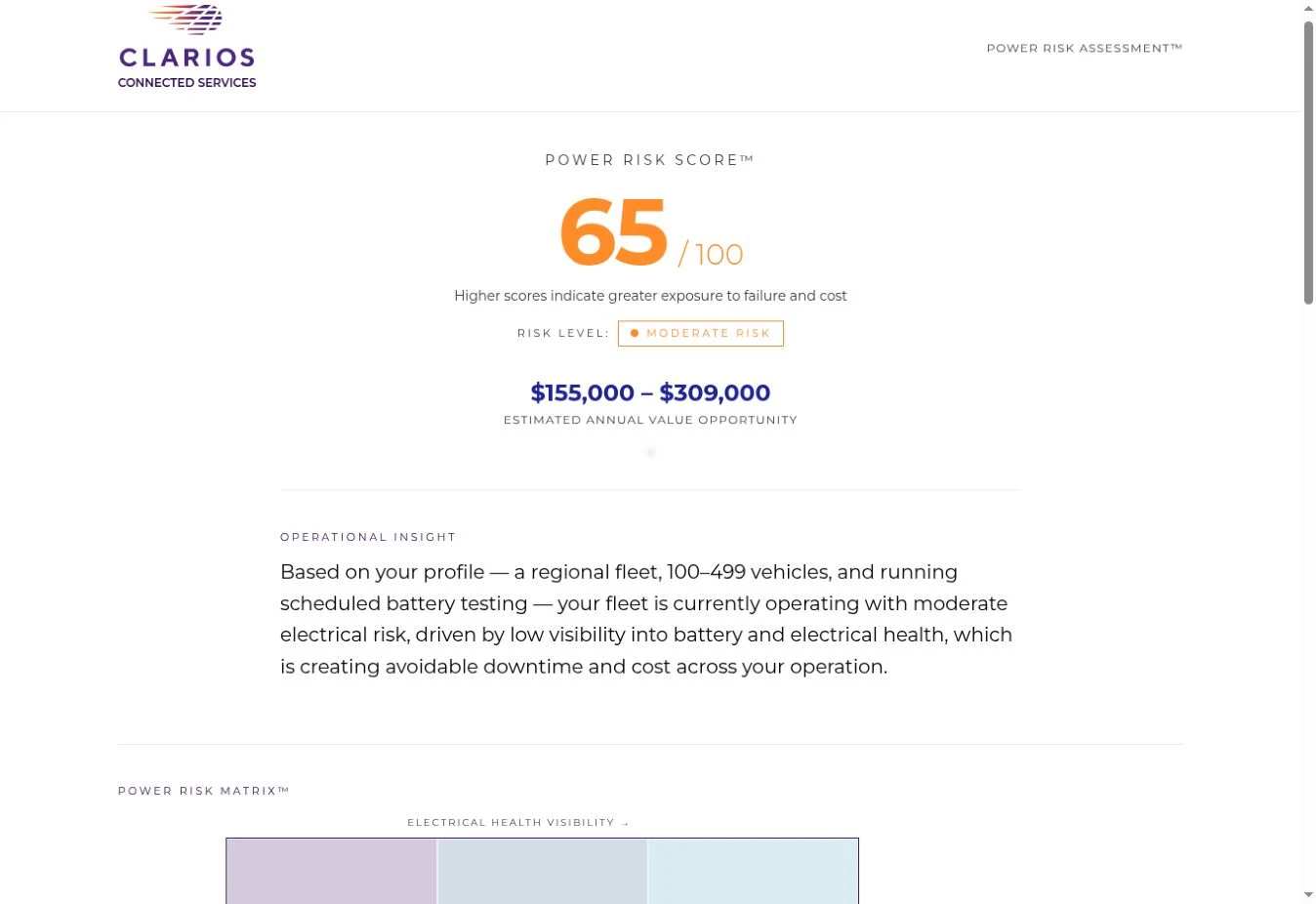
The app considers fleet type and size, battery-management practices, disruption frequency, and recurring challenges. Rule-based logic evaluates exposure, visibility, and predictability to produce a composite Power Risk Score, a risk classification, and relevant product recommendations. Financial exposure and opportunity estimates are illustrative and depend on stated assumptions.
The experience in practice
- Describe fleet operations
- Assess risk factors
- Receive a score
- Explore relevant products
The sample results explain the fleet’s position on the risk matrix, with visibility and predictability scores. Figures illustrate the sample assessment.

Value for the organization
The prototype shows how structured answers can inform enterprise lead engagement. A sales conversation can begin with the operating challenges the buyer reported and the solutions most relevant to those challenges.
Value for fleet buyers
Fleet operators get a way to think through their risks and see which solutions may be worth exploring. They receive useful context before a sales representative gets involved.
What makes it different
The intelligence is in how the inputs work together. The prototype applies defined scoring rules and uses the resulting profile to tailor the classification and recommendations.
The transformation
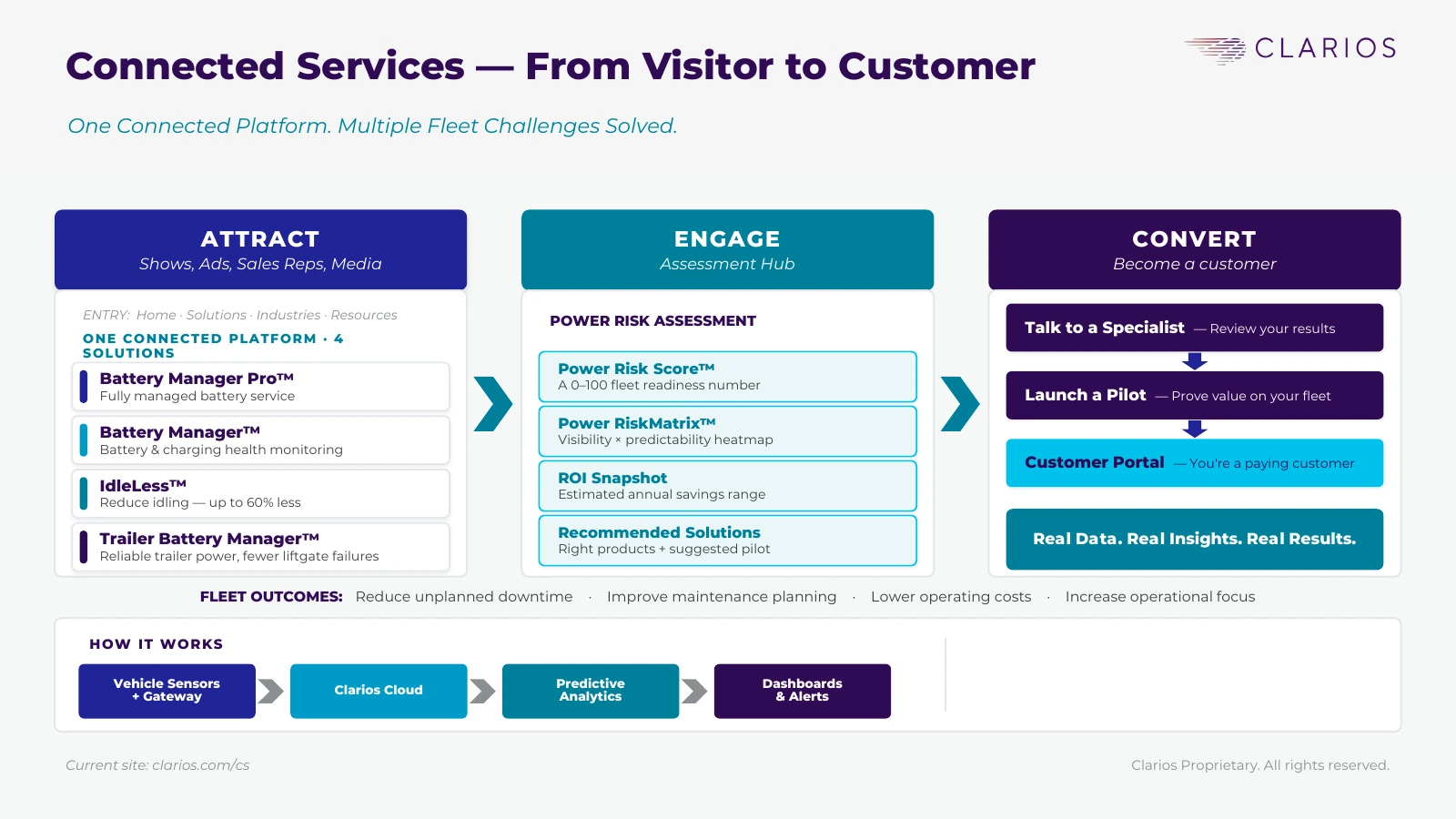
The prototype shows how an interactive product can make the initial buying conversation more useful to both sides. It connects customer education, product discovery, and lead engagement in one experience.
Additional project assets